Calibrated Control
The Energy of Effective Leadership
When you think about what makes an effective leader, you might think about their knowledge, skills, or experience.
These qualities are valuable, but they’re not paramount.
The most essential leadership ability is the power to shift energy - for self and others.
The energy a leader creates (and allows) is the difference between a team that is:
Engaged vs. Disengaged
Focused vs. Scattered
Unified vs. Fragmented
Harmonious vs. Combative
Productive vs. Ineffective
One of the keys to creating a culture that exudes the former qualities - Engaged, Focused, Unified, Harmonious & Productive - is to be properly calibrated on what you give your energy to.
There are two opposing mistakes we see leaders make in this area.
Learned Helplessness
Believing you are powerless.
For leaders, learned helplessness manifests as acting like you don’t have any control or influence over situations. It’s a psychological state popularized by Martin Seligman that reflects a belief that taking effortful action is meaningless. It’s an outsourcing of control and is often accompanied by inactivity, hopelessness, and rumination.
Leaders who fall into learned helplessness create stuck energy on their team.
This can lead to teams that don’t give sufficient effort or blame others for their lack of effectiveness.
Illusory Control
Believing you are all-powerful.
On the other hand, some leaders over-index towards behaving as if they are in control of everything, and that failure is the byproduct of insufficient or ineffective action. Leaders who succumb to the phenomenon of illusory control apply pressure on themselves and their team to execute and achieve, disregarding the confounding variables that prohibit, or at the very least complicate, execution and achievement.
Leaders who fall into illusory control create overwhelming energy on their team.
This can lead to teams that dodge, avoid, or shift responsibility, and can even result in lying or cheating to appease their boss’s unrealistic expectations.
The solution, and the path to creating powerful energy that is harnessed towards winning together, is what we call Calibrated Control.
Leaders who lead with calibrated control lead strategically and purposefully with high situational awareness.
They understand that in any situation, there are going to be things that they and their team directly control and indirectly influence. They also understand that there are things outside of their control and influence that they must be aware of, but cannot become fixated upon.
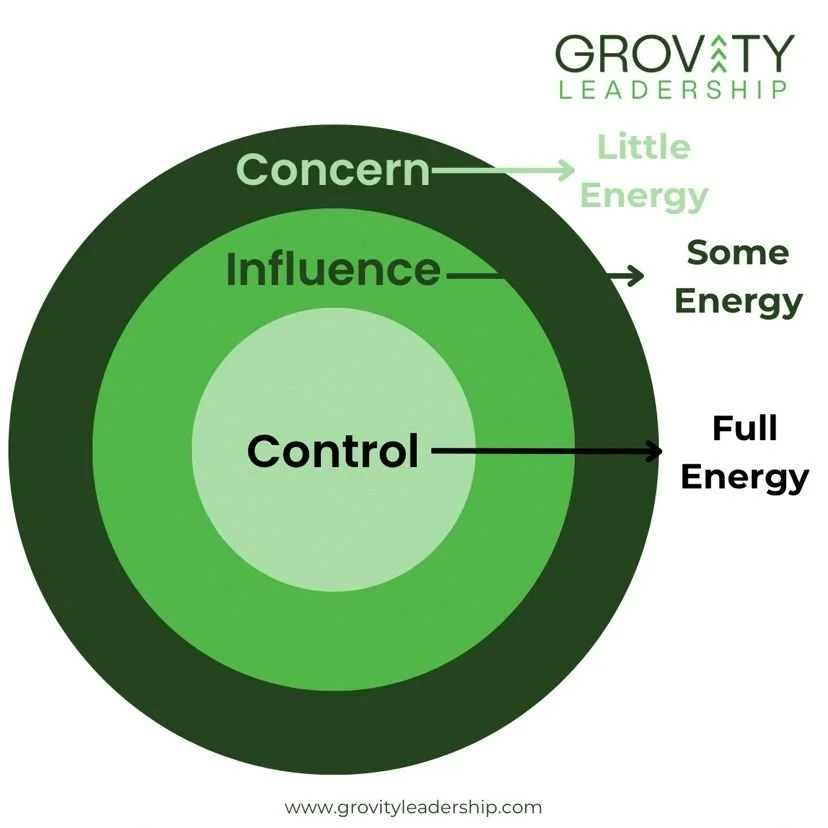
Source: Control-Influence-Concern Model adapted from “The 7 Habits of Highly Effective People”. (Covey, 1989).
In short, they give their full energy to what they can control, some energy to what they can influence, and little energy to the variables that concern them, but which they can’t control or influence.
In doing so, they create a culture of agency and autonomy where each individual is clear on where they need to spend their time, to what they need to give their focus, and what they need to monitor.
They do so with a healthy appreciation for what they can do to increase the likelihood of a desired outcome, while also embracing and accepting that sometimes they will fall short or lose, through no fault of their own.
Self-Coach
Between the phenomenon of Learned Helplessness and Illusory Control, which one are you more likely to err on the side of?
If Learned Helplessness, how do you reclaim a sense of agency and begin taking steps towards controlling what you can control and influencing what you can influence?
If Illusory Control, how do you create acceptance and acknowledgement for the things that you can’t control and influence?
Think of a situation you’re currently facing. What about that situation is within your control? What can you influence? What concerns you that you need to create acceptance around?
What shifts for you as you step back into this situation with this awareness?